This is the year you get all your ducks in a row!
A Practical Roadmap To CRA Compliance And Financial Stability During Uncertain Times
A Free Resource Hub For Home-Based Self-Employed Canadians

Publisher: L. Kenway BComm CPB Retired | Modified July 2026
Welcome ... pull up a seat
If you are self-employed in Canada, you're probably doing everything (or a lot) yourself. And the financial side of your business (the compliance, the cash flow, the Canada Revenue Agency (CRA) rules you're not sure you're getting right) is probably sitting in the back of your mind more than you'd like.
This site is built for home-based Canadian solopreneurs who want practical help understanding the rules, building better habits, and feeling more steady when business feels uncertain.
What you'll find here isn't a list of rules to memorize (though there may be a bit of that). It's an invitation to get to know your business more intimately ... the way a trusted friend who happens to understand numbers might walk you through it, piece by piece, until the puzzle starts to make sense.
Start with where your wobble is. You can come back for the rest.
So ... Who Are You Today?
The world has shifted. Trade uncertainty, rising costs, constant supply chain issues, economic pressure that nobody fully predicted ... that's not going away anytime soon. The solopreneurs who have come out the other side since 2020 aren't necessarily the ones with the biggest revenue. They're the ones who showed up every week, looked at their numbers, and built small repeated habits and flexibility into their routine that compounded over time.
That's what this site is about. Not perfect bookkeeping habits. Not heroic catch-up weekends. Just simple, repeatable routines ... like a little Monday morning admin maintenance, a quick Thursday cash check, and a Friday big picture look at your key numbers ... that keep your numbers visible, CRA-ready, and steady when things get wobbly.
And because trouble in business doesn't stay neatly in the business ... it bleeds into your family, your sleep, your decisions ... you'll also find reminders throughout to take care of yourself. Watch for the Beyond the Spreadsheet ... Because Life Happens flag. Because you can't run a resilient business if you are running on empty.
You've Got This! Laura
Is This Your Kind Of Place?
 Hang Out and Learn More About Your Business
This site is for Canadian solopreneurs and home-based self-employed business owners who want to get the financial side of their business under control ... without becoming an accountant. If you want practical help with CRA compliance, deadlines, categorizing expenses to make tax preparation easier, and building steadier business habits, you’re in the right place.
This site may not be the best fit if you’re looking for general bookkeeping training rather than CRA-specific guidance, work in a medium or larger corporate setting, or are outside Canada. The rules here are specific to CRA and Canadian law ... and the specificity is the point.
If you're looking for day-to-day bookkeeping setup, good bookkeeping practices, or how to read your financial statements ... that lives on my sister site. Start here to find your way over.
Not sure? Start with the wobble cards below. They'll tell you quickly whether this is your kind of place.
I have a problem right now.
Where's The 'WOBBLE' In Your Business Right Now?
Think of this as your roadmap for your journey.
When you’re dealing with continual economic uncertainty and constant change, you don’t need more hype and the noise ... you need a clear path. Pick the area that’s causing the most stress right now ... what I call wobble. You can come back for the rest.
Things feel tighter and less predictable
- Trade chaos, thinning margins, financial stress. Meets you where you are and builds toward real cash resilience.
I'm not sure what CRA expects of me
- Rules by business type, every deadline that matters, and compliance filing basics in today's digital reality.
Tax time feels overwhelming
- Line-by-line guide to tax form T2125. Deduction details, guardrails, and a rescue path if your books need work first.
I'm worried about a CRA audit
- What audit-ready books look like, a 10-point checklist, what CRA targets most, and what to do if you're already in it.
I'm not sure when to register for GST/HST
- When and how to register, file a return, invoice requirements, place of supply rules ... there's a lot to figure out.
I'm hiring my first employee
- The compliance picture shifts with your first hire. Registration, running payroll, filing and paying remittances.
I'm hiring a subcontractor
- The worker status relationship is different for subcontractors than employees. Learn the requirements.
I'm not sure where to start
- That's more common than you think. Start with the basics and your path will get clearer quickly.
I'm back. I know what I need.
Welcome Back
Back again? Good. This site works best as a place you return to when a question comes up, a deadline is getting close, or you want to steady the financial side of your business one step at a time.
Use these shortcuts to pickup where you left off:
- Command Centre - deadlines, obligations, compliance filing basics
- Concierge Desk - your shortcut desk for rates, updates and curated reads
This is also a good moment to ask yourself ... are your weekly routines holding? Monday mornings admin maintenance. Thursday cash checks. Friday's look at your key numbers. Small, consistent, repeatable routines. That's the system ... and it works because small repeated actions are what actually change things. You show up for it and the rest happens over time.
I hope you think of this site like an independent bookstore ... where you can browse at your own pace, make your own reading choices, no algorithm deciding what you need next. Bookmark this page and bookmark the specific pages you use the most so it's always one click away when something comes up.
Pull up a chair and pour a coffee, a cup of piping hot green tea or (in keeping with the times) a healthy smoothie or cool glass of water ... whatever's in your mug today. You've got this.
If you want to test your knowledge or spot a gap before it becomes a problem, start with the questions below.
Do You Know What You Don't Know?
- What to do if you can't pay your taxes?
- Do you know the difference between your filing deadline and your payment deadline?
- Do you know what triggers a CRA desk review?
Common Tax Deductions (Tax Form T2125)
I want to explore by topic.
Learn The CRA Rules: Choose A Core Topic
If you’d rather browse by topic, start with the area that matters most right now.
These are the core CRA and business-compliance topics affect many self-employed Canadians as their businesses evolve and change as the marketplace requires.





About This Site
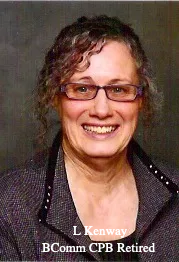
I'm a retired certified professional bookkeeper. I launched Bookkeeping-Essentials.com in 2009 to help small business owners who couldn't afford a bookkeeper get their books in order. It took on a life of its own over the years.
As I retired in 2020, I separated the Canadian compliance content to this dedicated .ca site ... so I could give CRA requirements, audit-ready bookkeeping habits, and Canadian tax rules the focused home they deserved.
What started as a compliance reference is evolving into something broader. Because after years of watching self-employed Canadians navigate the admin side of their businesses, I've seen that the real problem isn't always ignorance of the rules (but sometimes it is). It's often the gap between knowing what to do and actually building the habits that make it stick ... or a 'just this one time' mentality ... especially when the economy is throwing curveballs.
So this site now covers both. The CRA compliance foundation you need to stay audit-ready and off the radar. And the financial resilience habits that help you stay steady when things get uncertain ... which let's be honest, is the world we are living in now.
Most of what you'll find here is practical and presented without jargon as much as possible (sometimes jargon is necessary). You'll often find signposts here, not always rigid step-by-step systems. The goal is to help you understand what's going on so you can make decisions that fit your situation.
I'm retired, so I'm learning parts of this alongside you in these tumultuous times. Think of it as my notes (I'm a voracious reader) ... shared with you ... so we can make sense of it together.
Just Breathe, Laura
April 21, 2026
This Site Is Evolving

This site is being updated thoughtfully over time to better support self-employed Canadians dealing with CRA compliance and today’s economic uncertainty. Older content is still available but being reorganized around the questions matter to you. New content is being added around pressures that matter most right now.
Think of it like this ... I'm going to paint the walls and shuffle the furniture from room to room. Once that is done, I'll start redecorating. What does this mean? I may move content around a few times as I rearrange things to find the best place for it.
I'd like to invite you on a journey to discover your own path through the financial side of self-employment. Take a look at the map below to see where we are going and orient yourself before you start.
 Here's a map with an overview of the journey this site will take you on.
Because it is always better to have a map before you enter the forest.
Here's a map with an overview of the journey this site will take you on.
Because it is always better to have a map before you enter the forest.
S H A R E T H I S P A G E :
Back to top